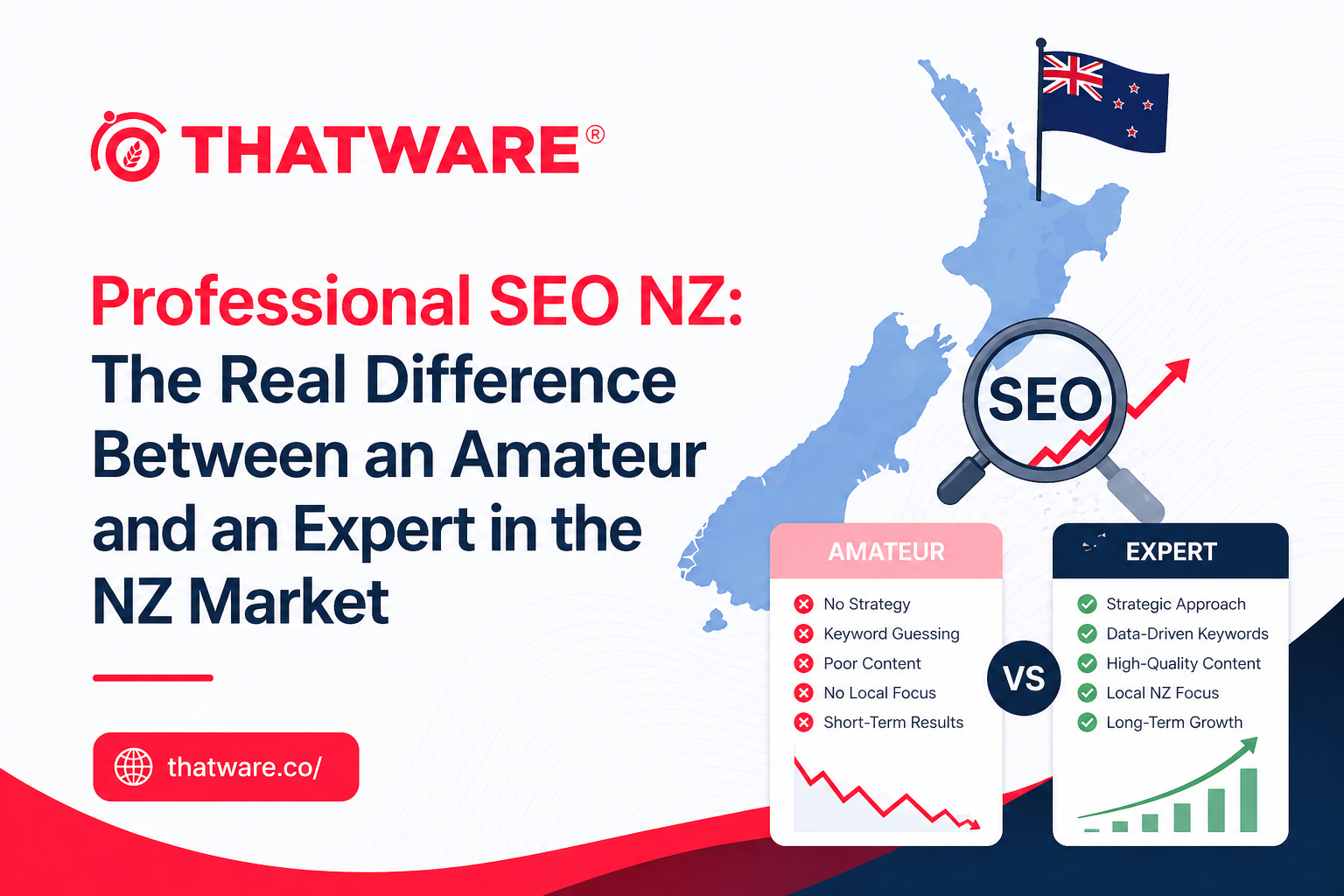
New Zealand’s SEO market is small enough that the distinction between professional and amateur practice is sometimes blurry to buyers. In larger markets, track records are more visible, references are easier to verify, and the portfolio of similar client work is broader. In New Zealand, you often can’t compare five agencies with deep experience in your exact industry vertical because those five agencies don’t exist.
This makes due diligence more important, not less. And it makes understanding what professional practice actually looks like more valuable, because you can’t rely on market dynamics to filter out the amateur end as reliably as in larger markets.
Here’s an honest breakdown of what separates professional SEO in the NZ context from the kind that costs time and budget without producing results.
What Professional Actually Looks Like
Professionals in any field share certain characteristics that are consistent across disciplines. They understand the limits of their knowledge. They communicate uncertainty accurately. They make decisions based on evidence rather than intuition or convention. They can explain their reasoning in terms that allow the client to evaluate it.
In NZ SEO specifically, professional practice involves a few things that distinguish it from the amateur end of the market.
Strategy before tactics. Amateurs lead with tactics. “We’ll do X posts per month, build Y links, and run Z technical fixes.” Professionals lead with understanding the client’s business, competitive landscape, and realistic opportunity before deciding what work to prioritize. The tactics follow from the strategy, not the other way around.
Market-specific knowledge. This is where the NZ dimension becomes important. Professional NZ SEO practitioners understand the local citation ecosystem, the publications that carry local authority, the Kiwi vocabulary variations that affect keyword targeting, and the competitive dynamics of specific NZ industries. Generic SEO knowledge applied without local context produces suboptimal results in a small, specific market.
Professional seo nz agencies that have genuinely specialized in the New Zealand market can speak specifically to these local dimensions. Agencies applying a global template to the NZ market without specific local knowledge are easier to identify once you know what questions to ask.
The Technical Competence Floor
A professional SEO practitioner has a baseline of technical competence that enables them to identify and address the technical issues that affect rankings. This doesn’t mean they need to be a software engineer. But it means they can conduct a meaningful technical audit, interpret crawl data, implement or oversee structured data, and understand how site architecture affects indexability.
The amateur end of the market often has a surface-level technical knowledge that looks competent in a pitch but doesn’t hold up in practice. They can identify obvious issues through automated audit tools but can’t interpret the results in context or prioritize them meaningfully. They follow checklists rather than understanding the underlying technical principles.
This distinction becomes visible during actual engagement. Professionals can explain why a technical issue matters in terms of how it affects crawling, indexing, or ranking. They can contextualize whether a technical issue is high priority or low priority for the specific site and situation. They can discuss tradeoffs between technical approaches.
The Content Strategy Dimension
Professional SEO in New Zealand requires understanding that content quality standards have risen significantly. The low-effort content approaches that might have worked several years ago now produce minimal results and sometimes negative ones.
Professional content strategy starts with genuine understanding of what New Zealand audiences are searching for and why, using actual NZ search data rather than extrapolating from Australian or UK data. It involves creating content that genuinely addresses those queries with specificity and depth. It involves understanding the competitive landscape for content in specific topic areas in the NZ market.
Amateur content strategy produces content to fulfill a publishing quota without this foundation. The result is content that technically exists but doesn’t rank because it doesn’t demonstrate the quality signals that search engines reward.
The Measurement and Reporting Standard
Seo agency new zealand providers at the professional level report on business-relevant metrics with honest attribution, not just activity metrics.
What did the organic program contribute to leads or revenue this month? Which content is actually driving business queries rather than high-volume low-intent traffic? How is the competitive position changing for priority keyword clusters over time?
These questions require proper measurement infrastructure, honest interpretation of data, and willingness to present results that are sometimes mixed rather than selectively positive. Professional practitioners build this infrastructure as part of the engagement and use it to inform ongoing strategic decisions.
Amateur reporting typically focuses on the metrics that look best regardless of business relevance. Keyword rankings that don’t correspond to valuable searches. Traffic growth that doesn’t translate to business outcomes. Activity metrics that document what was done rather than what was achieved.
How to Tell the Difference Before You Sign
A few evaluation approaches help distinguish professional from amateur practice before committing to an engagement.
Ask them to review your current site and give you a preliminary diagnosis in the first meeting. The quality and specificity of what they identify, and how well they prioritize and contextualize it, reveals a lot about technical depth.
Ask for examples of how they’ve approached the NZ market specifically for previous clients in your industry or a comparable one. Specific examples with honest discussion of what worked and what didn’t are more informative than curated success stories.
Ask what they would measure to evaluate whether the engagement is succeeding, and whether they’re willing to build that measurement into the contract. The willingness to be held accountable to defined outcomes is a professional marker.
The NZ market is small enough that professional practitioners are findable with deliberate search. The due diligence required to find them is worth doing before the budget is spent rather than after.