There’s a strange kind of quiet in the kitchen when your cooking appliances stop working. You go to preheat the oven or fire up a burner, and… nothing. No click, no heat, no sizzle. Just silence. That silence? It speaks volumes. It throws off dinner plans, delays family meals, and turns what should be a relaxing routine into a frustrating guessing game.
We don’t often think about how much we rely on these machines — until they give up on us. But when they do, you don’t have to panic. You just need to know what you’re dealing with and what your best move is next.
The Electric Oven Blues: When Nothing Gets Hot
So, you’ve set the temp, hit “start,” and waited. And waited. Still cold. Maybe the light comes on, maybe not. Either way, you know something’s off. It’s not just a tripped breaker or a loose plug — something inside the system just isn’t doing its job.
Modern ovens are a little sneaky in that way. They look like they’re working even when they’re not. The display might glow, the timer might tick, but the heating element? Nada.
This is where electric oven repair comes in. It could be a blown fuse, a bad relay board, or a fried element. It’s not always something you can see with the naked eye — which makes diagnosis a bit of a puzzle. The key is not guessing. Because replacing the wrong part won’t solve anything… it just wastes time and cash.
Pro tip? Don’t keep restarting the cycle hoping it’ll work next time. This isn’t a vending machine. If it’s not heating, it needs a real look.
The Other Side of the Flame: When Gas Ranges Misbehave
If you’ve got a gas range, there’s a particular joy in cooking with an open flame. Instant heat, quick response, that satisfying click-click-whoosh when it ignites. But when something messes with that rhythm — when the flame won’t light, or flares up unpredictably — it gets stressful fast.
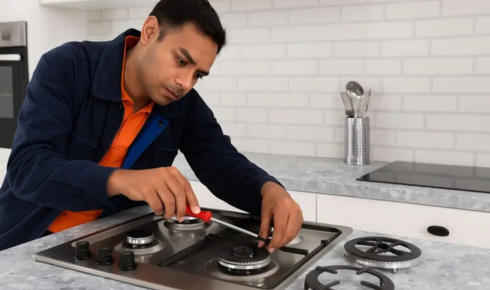
Gas range repair is not something to take lightly. Gas appliances are amazing when they work properly, but they need respect. A broken igniter, a gas leak, a misaligned burner cap — any of these can mess with performance, or worse, create a safety hazard.
If you’re smelling gas or hearing constant clicking with no flame, stop using it immediately and shut off the supply if you can. This isn’t the time to DIY. A licensed tech will not only get your burners working again but ensure there are no underlying leaks or pressure issues. Safety first, always.
When the Cooktop Turns Temperamental
Sometimes it’s not the oven or the full range — it’s just the cooktop that goes haywire. One burner heats up too much, another won’t turn on at all. Maybe you notice crackling sounds, flickering heat levels, or random shut-offs while you’re in the middle of boiling pasta.
Cooktops are a little weird because they look so sleek and simple, but inside? They’re loaded with sensors, relays, and heating modules that all need to stay in sync.
Cooktop repair can involve anything from replacing a single burner coil to fixing a damaged touch control panel or swapping out a power board. And with induction models especially, it’s not as easy as just “replacing the element.” These systems are smart, but finicky. And they don’t like being messed with.
If you’ve noticed an issue with just one side of your cooktop, or odd behaviors like inconsistent heat or error codes, don’t ignore it. These small glitches tend to build up over time, and what starts as a minor inconvenience can turn into full-blown appliance failure.
Don’t Just Wiggle the Knob and Hope
Look, we’ve all done it. A burner doesn’t light, so we jiggle it. The oven won’t start, so we turn the knob harder. Sometimes it works. Most times it doesn’t. And every once in a while, it makes things worse.
The truth is, today’s kitchen appliances are a whole lot more complex than the ones our parents had. Smart technology, energy efficiency systems, digital interfaces — it all looks simple on the outside, but under the hood, it’s like a car engine.
That’s why calling a professional repair service isn’t a luxury — it’s a practical move. They know what to look for, how to test it safely, and what parts are worth replacing.
When to Repair and When to Let Go
Here’s the deal: not everything is worth fixing. Sometimes, the parts are too expensive. Other times, your unit is so old that even after a repair, it’s not going to run efficiently. So how do you know?
A good tech will tell you. They won’t pressure you into fixing something that doesn’t make sense. They’ll walk you through your options: fix it now, plan for replacement, or explore warranty coverage if it’s still valid.
A lot of people waste money on repeated small fixes because they’re not ready to replace the appliance — which is fair. But if the repairs are stacking up, it might be time to let go and upgrade.
Final Thoughts: Bringing the Heat Back to Your Kitchen
Cooking is more than just food. It’s how we gather. It’s comfort after a long day. It’s celebration and connection. So when your oven, stove, or cooktop goes down, it’s not just an appliance problem — it’s a life interruption.
Whether it’s an electric oven that won’t heat, a gas range acting up, or a moody cooktop that’s decided to retire early, know this: it’s fixable. And it’s okay to ask for help.
The right repair tech won’t just get your appliance working again — they’ll restore a little peace to your daily rhythm.