When Everyday Water Doesn’t Feel Quite Right
Water is easy to take for granted. You turn on the faucet, fill a glass, start the dishwasher, or step into the shower without giving much thought to what’s actually flowing through the pipes.
Then something changes.
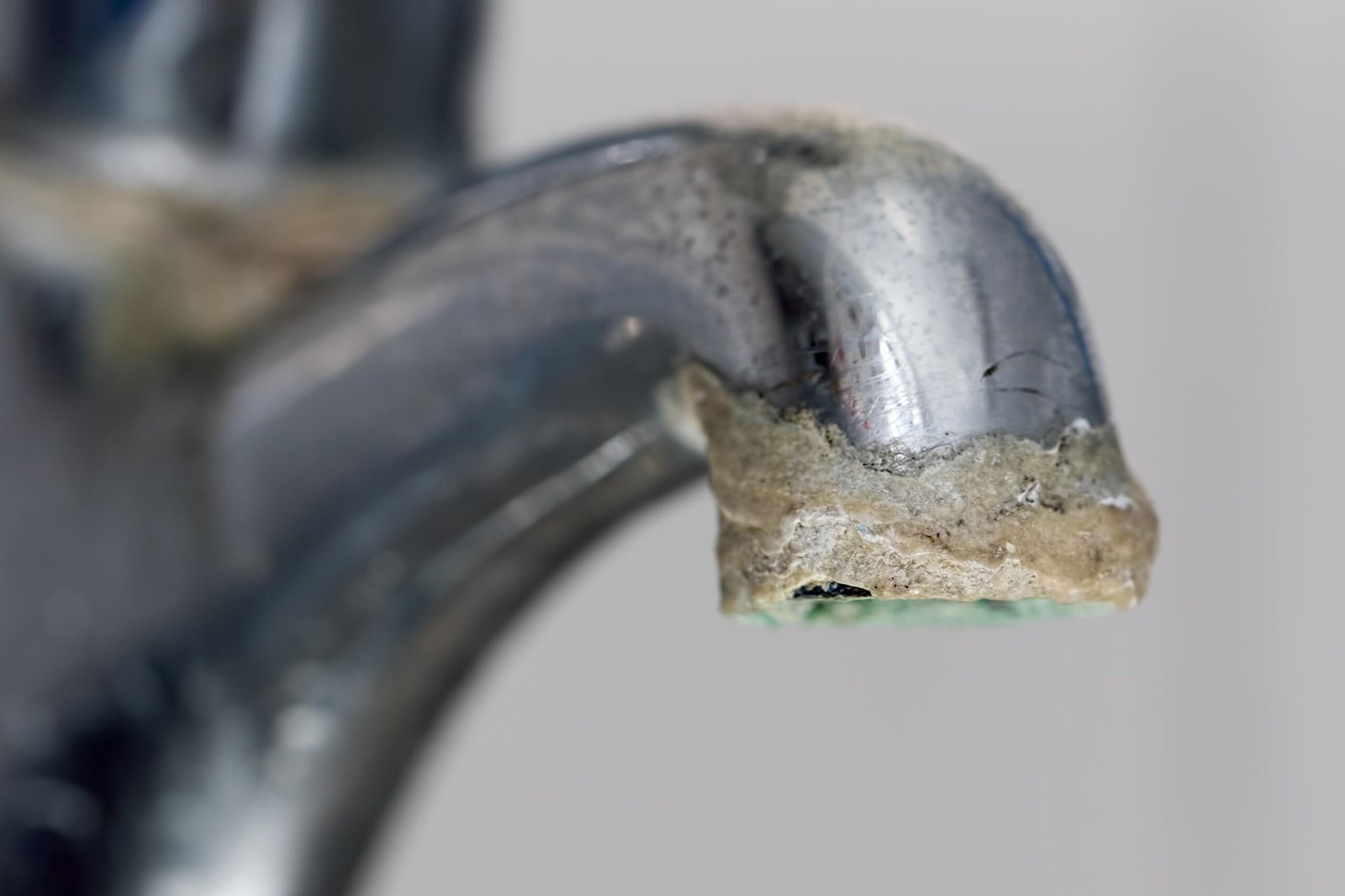
Maybe white deposits start appearing around your faucets. Perhaps the shower water has a strange smell, or your drinking water doesn’t taste as fresh as it used to. These little signs can be annoying, but they can also provide useful clues about what’s happening with your water supply.
The tricky part is that different water-quality problems can look surprisingly similar. That’s why testing the water is usually a better starting point than immediately buying a filter.
Hard Water Leaves a Familiar Trail
One of the most common household water concerns is hard water & scale buildup. Hard water contains dissolved minerals, mainly calcium and magnesium. While those minerals aren’t always visible in the water itself, their effects tend to show up around the house.
You might notice cloudy spots on glasses, white crust around faucets, or deposits building up on showerheads. Over time, mineral scale can also accumulate inside water-using appliances and plumbing components.
A water softener can reduce hardness by exchanging calcium and magnesium ions for sodium or potassium ions. Whether you actually need one, though, depends on the hardness level and how much it’s affecting your home.
Not Every Water Problem Is About Hardness
Sometimes the water looks completely normal but doesn’t taste or smell quite right.
Municipal water may contain disinfectants used to protect the public water supply. Private wells can develop naturally occurring tastes or odors associated with minerals, organic matter, or groundwater conditions.
These issues can be grouped into taste, odor, & other concerns, but each may have a different cause.
Activated carbon filtration, for example, can help reduce certain tastes and odors. Other problems may require different treatment technologies. The important thing is not to assume that every unpleasant taste needs the same filter.
The Rotten-Egg Smell Has a Name
If your water smells like rotten eggs, you’re probably going to notice it immediately. There’s not much subtle about it.
One possible cause is hydrogen sulfide, a naturally occurring compound that can be present in some groundwater supplies. Even relatively small amounts can create a strong odor, particularly when water is heated.
If the smell appears mainly in hot water, the water heater may deserve attention. If it occurs in both hot and cold water, the well or incoming water supply could be involved.
Testing and proper diagnosis can help narrow down the source before treatment equipment is installed.
Why Testing Is Such an Important First Step
It’s tempting to diagnose water problems based on what you can see, smell, or taste. Sometimes those observations are useful clues, but they don’t tell the whole story.
A water test can measure characteristics such as hardness, pH, iron, manganese, sulfur-related compounds, and other factors depending on the water source.
This is especially important for private wells. Groundwater conditions can change over time, and a well that tested one way several years ago may not have exactly the same chemistry today.
Testing gives you information instead of guesswork.
And when water treatment equipment can cost hundreds or thousands of dollars, having information first is a pretty sensible investment.
One Filter Can’t Do Everything
Water filtration products sometimes make treatment sound remarkably simple. Just install a filter, and suddenly every possible water problem disappears.
Real water chemistry isn’t quite that convenient.
Sediment filters are designed to capture particles. Carbon filtration can address certain tastes, odors, and chemicals. Water softeners focus on hardness. Specialized systems may be necessary for iron, sulfur, or other specific contaminants.
If a home has several problems at once, a combination of treatment methods may be appropriate.
But that doesn’t mean you need every piece of equipment available. More equipment also means more maintenance, more installation requirements, and more expense.
Good treatment is targeted treatment.
Hard Water Can Affect More Than Your Faucets
Scale isn’t just an appearance problem.
Mineral deposits can build up inside water heaters and other appliances that regularly heat water. Over time, that buildup may affect efficiency and performance.
You may also find yourself cleaning fixtures more often than you’d like. That white crust has a remarkable talent for returning just after you thought you’d finally gotten rid of it.
Reducing hardness can make everyday cleaning easier and help limit mineral deposits throughout the plumbing system.
The best solution depends on the severity of the hardness and the needs of the household.
Sulfur Problems Need the Right Approach
Hydrogen sulfide treatment isn’t necessarily as simple as installing a standard carbon filter.
Depending on the concentration and water chemistry, treatment may involve oxidation followed by filtration. Air-injection systems, oxidizing media, or other specialized approaches can be used in certain situations.
The right method depends on the actual water.
That’s an important distinction because treatment systems aren’t interchangeable. A technology that works well for a mild odor may not be appropriate for a much stronger sulfur problem.
Your Water Heater Can Tell You Something
If an odor or taste appears only when you use hot water, don’t immediately blame the well.
The water heater can sometimes contribute to unusual odors or changes in water quality. Components inside the tank can interact with the water and create conditions that weren’t present in the cold-water supply.
Checking whether the issue occurs with both hot and cold water is a simple troubleshooting step.
It doesn’t replace professional testing, but it can provide a useful clue about where to look next.
Consider How Much Water Your Household Uses
Water treatment systems need to handle real household demand.
A small home with two people will have different flow requirements than a large family with several bathrooms. Peak demand matters too. If someone is showering while the dishwasher is running and another person turns on a faucet, the treatment system needs to keep up.
Proper sizing helps maintain reasonable water pressure and treatment performance.
A system that’s too small may struggle during busy periods. One that’s unnecessarily large may cost more than needed.
Maintenance Is Part of the Equation
No treatment system is completely maintenance-free.
Filters eventually need replacement. Softening systems require regeneration and attention. Specialized treatment equipment may need periodic servicing or media replacement.
Before choosing a system, ask what routine maintenance looks like and how much replacement media or filters typically cost.
It’s much easier to budget for maintenance when you know about it from the beginning.
Look at the Whole Water System
Sometimes the source of a water problem isn’t the water itself.
Old plumbing can contribute discoloration or metallic tastes. A water heater may be responsible for hot-water odors. A well system can also develop mechanical or environmental issues that affect water quality.
For that reason, a good diagnosis considers the entire system rather than treating the first symptom that appears.
Better Water Begins With a Better Diagnosis
Water problems don’t have to be mysterious. Hardness, strange tastes, odors, and sulfur-related issues all leave clues, but those clues need to be interpreted correctly.
Start with testing. Understand what’s actually present. Then choose treatment equipment designed around those findings.
Whether your home needs softening, carbon filtration, oxidation, sediment removal, or a combination of technologies, the goal should be practical treatment that fits your household.
When everything is working properly, you probably won’t think about your water very much. You’ll simply fill a glass, take a shower, wash the dishes, and carry on with your day.
And really, that’s the whole point. Good water treatment should solve problems quietly in the background — leaving you with water that feels clean, comfortable, and dependable.